
Meny
.jpg)
In February, ShareMusic travelled to Belfast to participate in the RENDR Festival, an international festival that explores the intersection of artistic practice and new technology. Over two intensive days, artists, researchers, and technology developers gathered at the state-of-the-art Studio Ulster facility to explore how inclusive working methods can shape the creative expressions of the future.
The festival kicked off with the Inclusive Creativity Concert, featuring ShareMusic’s ensemble Elefantöra on stage alongside musicians from the Hard Rain Soloist Ensemble from Belfast and Acoustronic from Derry. The concert combined contemporary music, improvisation, and visual art in a setting where cutting-edge virtual production technology was integrated into the performance itself. One of the highlights was a new version of Zoom Time, composed by Frank Lyons with visual elements by Paul Moore.
The piece is based on a fully composed orchestral structure that forms the foundation of the performance, with the participating ensembles moving between set sections and improvisation. In the piece, music and visuals interact in real time—sound, movement, and animations influence one another, creating an ever-changing visual expression. Here, the visual elements did not function as a traditional score, but rather as a parallel dimension within the piece, where conducting, structure, and improvisation together shaped the whole.
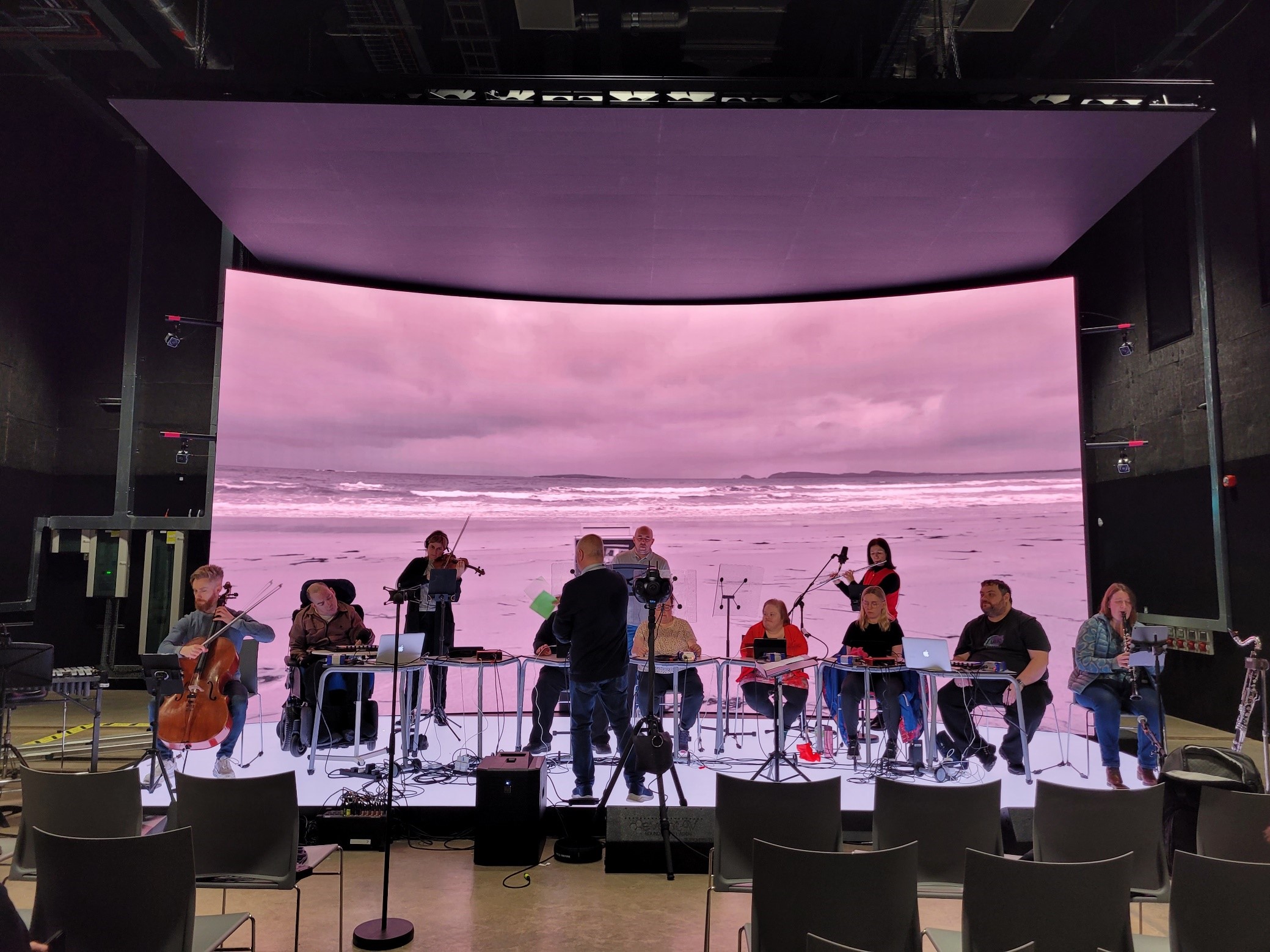
For Elefantöra, the interaction with both the audience and fellow professionals became an important part of the experience:
- It was great to meet people in the industry. Many were interested in our work and wanted to know more about us.
The interplay between music, visuals, and technology also became a central part of the artistic expression, as Ewe Larsson from Elefantöra describes it:
- It felt like a very powerful experience since technology played such a big part in the piece; it tied everything together beautifully. Frank Lyons guided us through the piece. The technique he used was to show different colour cards representing various aspects of the pandemic, which in turn represented different samplings for me. It gave me a broader picture of what conducting can look like and the paths one can take to increase the inclusion of people with different experiences, backgrounds, and circumstances—regardless of what those paths look like—into the industry.
The concert took place at Studio Ulster, one of the world’s most advanced facilities for virtual production. With multiple stages for virtual production, motion capture, and advanced 3D and 4D scanning, the venue offers entirely new possibilities for artistic creation.
The environment also made a strong impression on the musicians:
- It was amazing to be in such a place with so many possibilities. We have a lot to learn from it.
At the same time, the focus isn’t just on the technology itself, but on how it’s used to promote accessibility and inclusion—a theme that ran throughout the entire festival.
The collaboration between Elefantöra and the other ensembles was characterized by curiosity and shared common ground. Coming together around similar instruments and forms of expression fostered a natural exchange on stage:
- It was fun to fill the stage with people who play the same instruments as our ensemble; it was a wonderful exchange, and we found many similarities in how we approach the music.
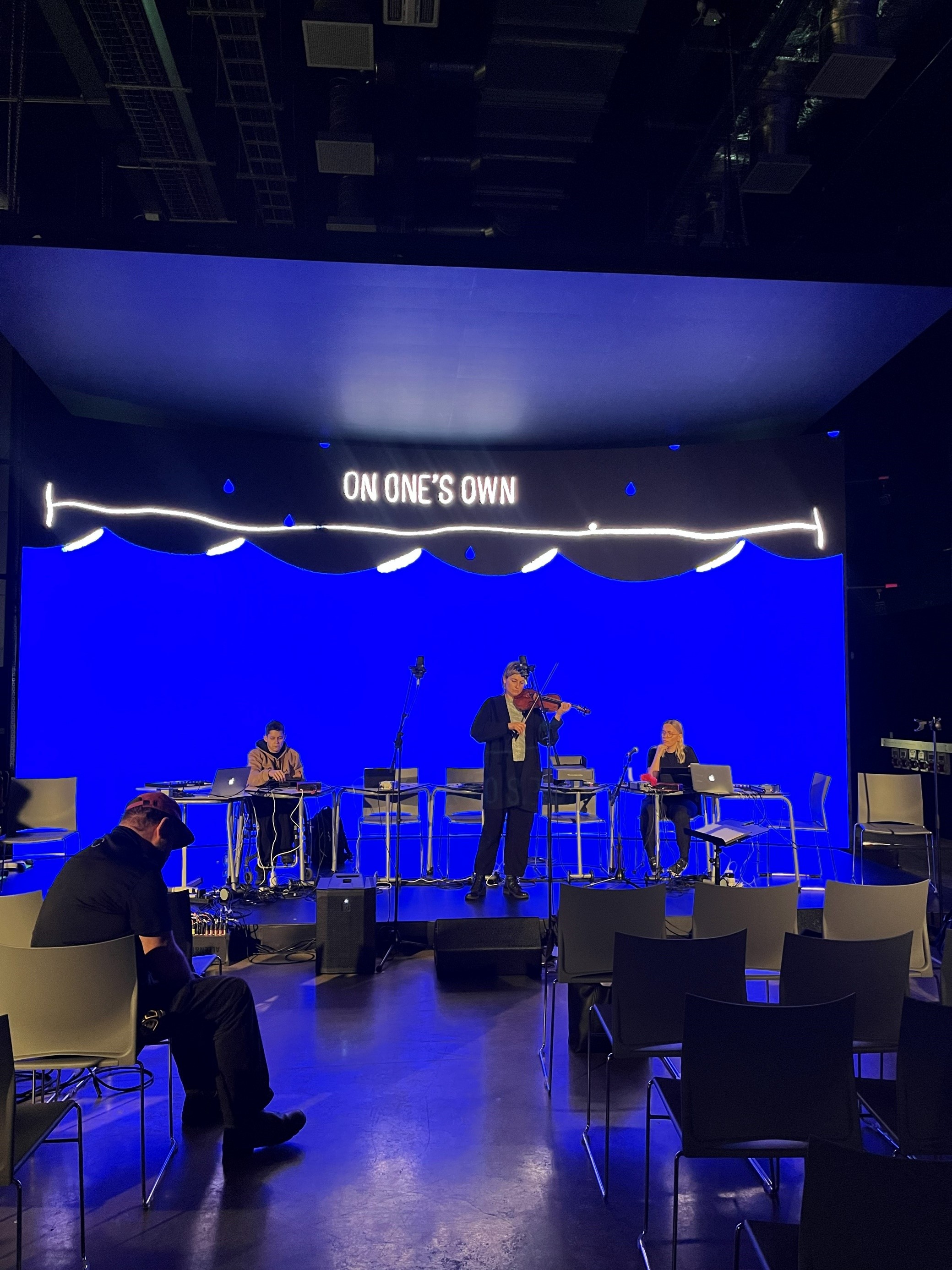
Elefantöra also had its own segment in the concert with a specially composed piece for which Liv Dahlstrand from the ensemble created an animation that served as a visual score. The musicians performed alongside violinist Ioana Petcu Colan, whom they met and collaborated with for the first time on site. As Ioana herself describes it:
- It's really interesting working with animation instead of a musical score, because you really have to use your imagination to try and find textures and sounds that really captures the mood and the essence of the visuals.
Ewe continues:
- We had never played from an animation that served as sheet music before. This allowed the audience to engage with the piece and form their own interpretation, which felt like we were opening up the piece and letting them get closer to us.
Working with new musicians in such a setting also became part of the process, where trust and responsiveness took centre stage and contributed to a shared artistic experience.
Conversations on inclusion and technology
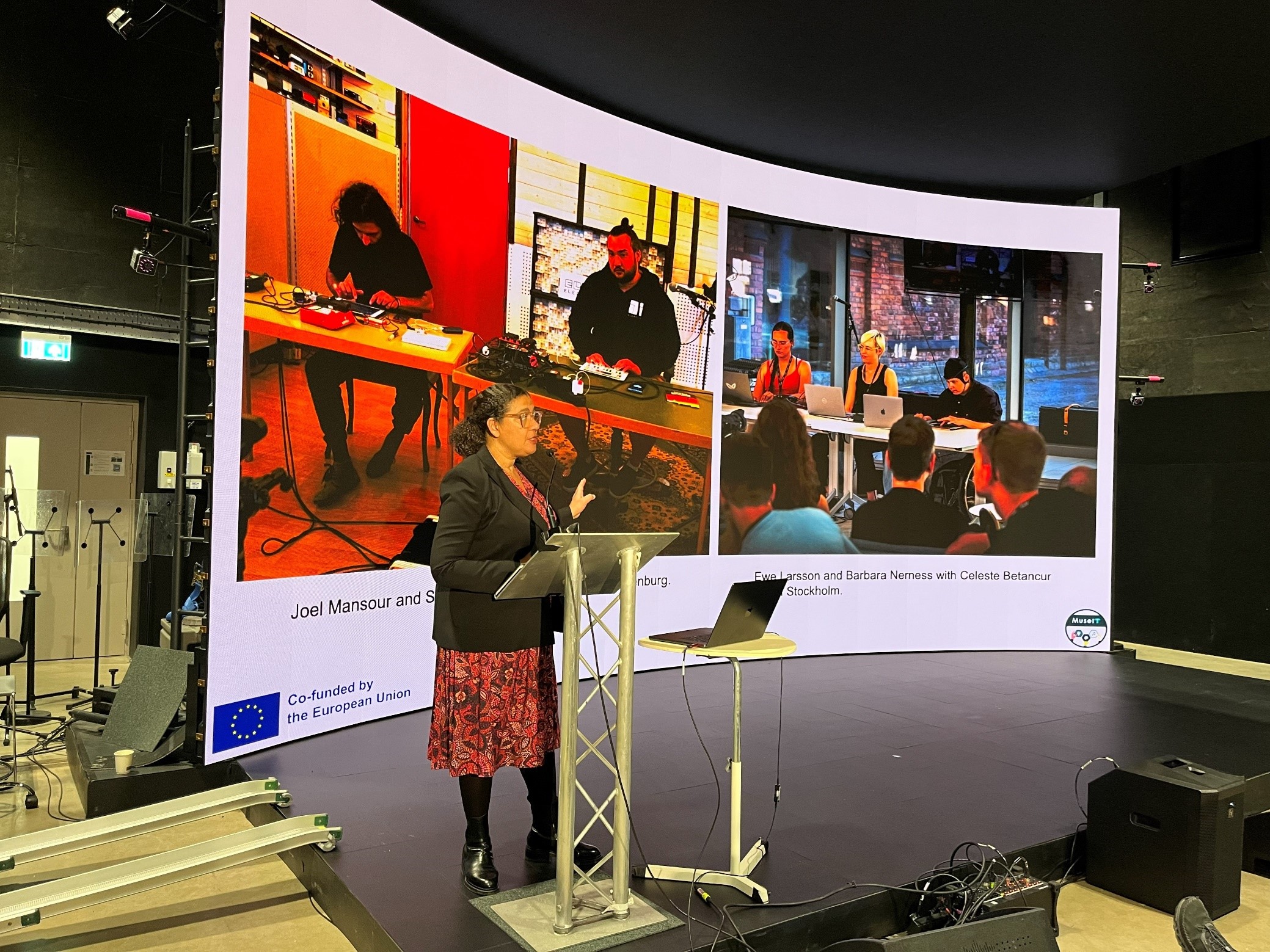
The day after the concert, the festival continued with the Inclusive Creativity Symposium, where artists, researchers, and organizations from across Europe gathered to discuss how technology can contribute to a more inclusive cultural life.
Sophia Alexandersson represented ShareMusic, highlighting the organization’s work at the intersection of art, research, and accessibility. The event also provided opportunities for sharing experiences and forging new collaborations:
- Those were intense days, filled with conversations, music, and meetings with both old and new colleagues in the field.
RENDR Festival is part of a growing international movement uniting art and technological innovation. For Elefantöra and ShareMusic, their time in Belfast was not just a performance, but an important step in their ongoing work where music, technology, and inclusion come together.
When people, ideas, and technologies come together, new opportunities arise—allowing more people to participate, make a difference, and create, on their own terms.


.png)