
Meny
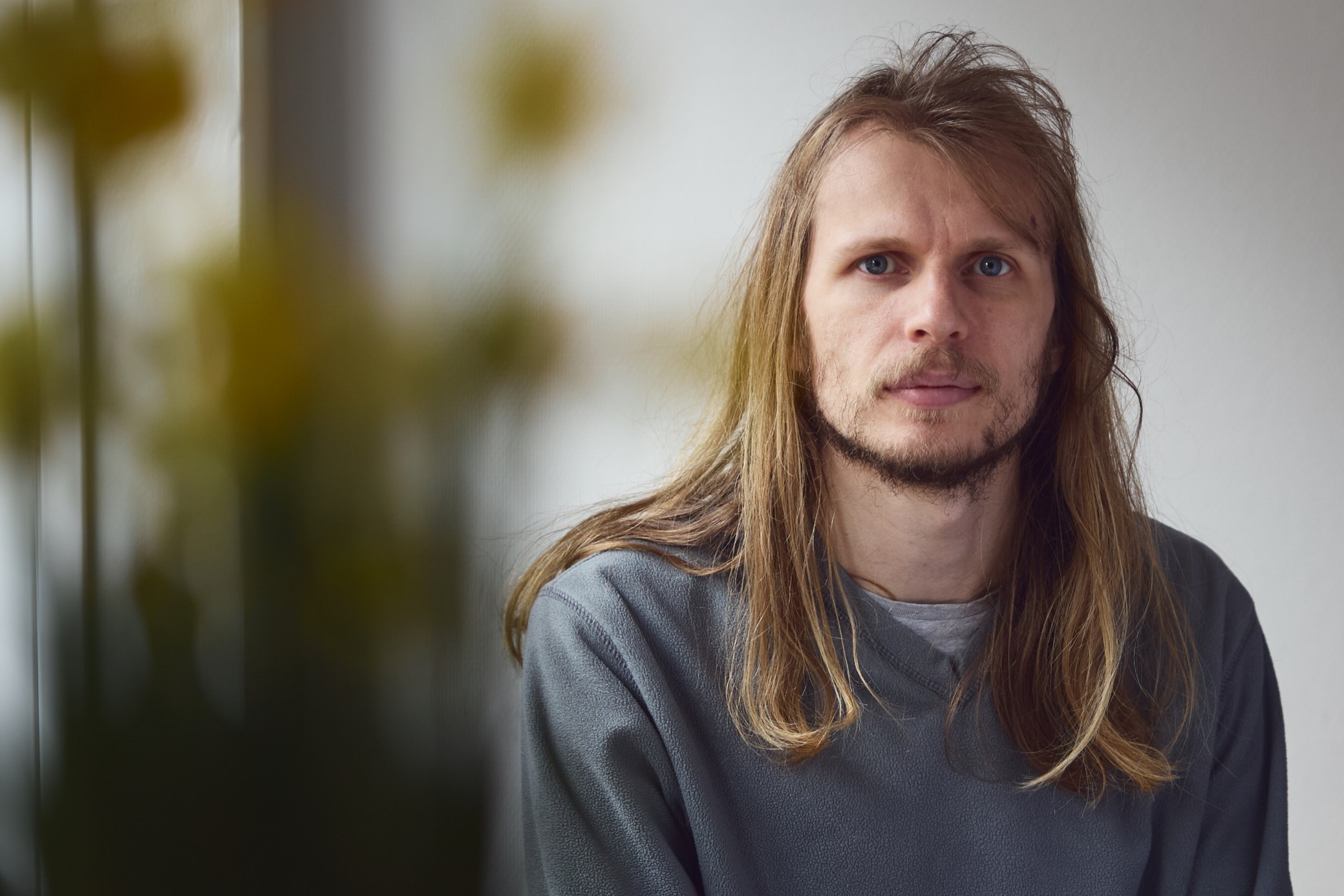
What happens when myths, nature, and electronic sound worlds come together? For composer Joe Stollery, music is a space for exploration, storytelling and discovery. Through new collaborations and digital possibilities, he continues to investigate how music can be created, shared and experienced in new ways.
How would you describe your musical language today, and where do you feel it is heading?
- I’ve spent most of my formative years exploring different ways to musically interpret the stories, pictures, mysteries and other ideas that excite my curiosity, and as a result I feel I have developed a wide-ranging, almost eclectic musical language today. It’s difficult to predict where this will go from here, although I do feel I’m still trying to work out a singular musical approach to storytelling that fully satisfies my composition style, so I think that further developments will help guide me in the right direction here.
Your work moves between common-practice and the modernist, what draws you to that space in between?
- I do enjoy listening to lots of music across the centuries, and I think there’s something about the contrast between the old and new systems of artistic practice that interests me in particular. I’ve always been especially fascinated by the music of the late 19th and early 20th centuries where the dogmatic conventions of common-practice harmony were beginning to disintegrate and where exploration of chromatic dissonance was encouraged. I feel there’s something particularly exciting and dramatic about the tension that straddles the different ways dissonance was treated in relation to consonance, and these disparate approaches feed variously into my music, whether through counterpoint, as a timbral feature or simply because of dramatic potential. A particular favourite harmonic technique of mine which crops up in various pieces involves moving from one fully tonal chord to another via heavily chromatic-focused voice leading – my family refers to this technique as ‘swamping’, perhaps because of the way it moves through those unexpected chords! But aside from shifts in harmonic practice, such historical periods also hark back to a time when humanity aimed to question convention and normality through expression, and I reckon being neurodivergent has encouraged me to appreciate this notion.
How do your interests in myths, nature and the supernatural translate into musical decisions?
- I usually like to focus on stories and premises that have a vivid narrative with lots of potential for characterisation in music. Animals in particular give great opportunities for direct imitation in sound, but I have also found other ways to capture their essence in music, such as through their behaviour and general symbolism (even their footprints can be an inspiration, such is the case of my solo viola piece Deer Tracks). Analogy also plays a part to an extent – I tend to take a particular interest in tales which have some connection to my personal experiences, generally in the way they play out in the character’s actions.
What sparked your interest in exploring electronic and digital instruments at this stage in your career?
- It was mainly to help acquire some new timbres to explore. I do enjoy the prospect of discovering new musical instruments and sounds, although I will also confess that I haven’t really found working with digital technology easy growing up – I was always daunted by all the buttons and dials on my dad’s mixing desks, not to mention pondering how he set it all up, and furthermore I could never really understand when my computer inevitably crashed and was only able to lose my cool over it! But I also enjoyed listening to these electronic sounds – there is a particular synth keyboard we owned which had a plethora of voices that I constantly toyed about with. And then there’s the 8-bit sound worlds of classic video games I played, which feels almost like orchestral music in miniature. I reckon nostalgia plays a big part here, and all these little adventures have led me to subsequently try and discover how to make and utilise such sounds for my music.
Now that you’ve met and worked with Elefantöra, what has the experience left you with?
- It has certainly left me with lots of food for thought! It was really interesting meeting the musicians and getting to know the ways they approach performing, as well as seeing what kinds of scores they work with. [Furthermore, getting to experience the processes on music applications such as Sampler and Reaper has shown me there is a vast plethora of musical opportunities to explore.
What does a meaningful collaboration look like to you as a composer?
- I think it would be somewhat like a feedback loop, where both sides are able to respond to one another’s process whilst contributing new perspectives to an original stimulus. The result would hopefully lead to a piece that provides lots of interesting insights from a retrospective viewpoint.
How do you balance control and openness in a collaborative process?
- I will say this is particularly challenging for an autist like me, as my mind seems to innately want to stick fast to doing only one thing or another! But it does help to have a simple, open-ended plan like some simple notes or a storyboard to begin with, which could have sections designated for open improvisation as well as some fixed moments. This is how I worked with the librettists in my operas, and also Katherine Wren and my dad Pete on the project On a Wing and a Prayer.
Have there been moments in your career where collaboration changed your artistic direction?
- I don’t think my artistic direction has changed dramatically from my current collaborations, although I will say working with Katherine and dad in On a Wing and a Prayer has encouraged me to think about leaving spaces and not to be too precise in notation or strive to complete things. Similarly, working with Elefantöra and Digital Orchestra: North-East has suggested to me to explore new ways to interpret and present my music to performers (i.e. in Figurenotes, storyboards).
You mentioned that this journey is part of your development as a professional composer, what does that growth look like for you right now?
- Although I’m technically still in the early stages of my career, I definitely believe this trip has helped contribute to sowing some new seeds, and I feel like I can see great opportunities for my future as a composer. The more I meet and work with ensembles like Elefantöra and meet other composers outside the Northeast of Scotland, the more confident I feel as a composer in my own right.
What role does curiosity play in your work?
- Quite a good deal; I am always intrigued by a variety of topics (and not just nature and mythology!) Stimulus for my music tends to come from many different places and approaches, and often disparate elements crop up in the same piece. I noticed this particularly when it comes to writing orchestral music, and pieces such as Slains, Reverdie and my most recent work Apparitions from the Land beyond the Mountains feature varying panoplies of musical elements that seem to want to vie for the foreground!
This trip is also about becoming more independent, what does independence mean to you in your life and career?
- The prospect of independence still feels like a big challenge to me, but I also know it is necessary to make progress in my career. I feel like I’m currently somewhere in the middle stages of this process. I have noticed there are some things I can manage fine on my own, such as travelling domestically by train and bus, although as I mentioned above, every new thing is always going to feel difficult for me to being with, and I know there’s still plenty of things I need to learn and master.
How does travelling and meeting new people influence your artistic thinking?
- I think both these things definitely help my music in the long term. I know that meeting new people can help build my network and provide opportunities for my music, and as much of my music is inspired to an extent by certain locations, I find it quite useful to visit such places in person to get a physical impression of them. Hence, I reckon even just travelling to brand new places can help influence my artistic thinking by providing new stimuli for my music.
Are there moments during this journey that have already shifted your perspective?
- If there is one thing that stood out, I will say as part of my trip has involved me exploring abroad on my own rather than with family (I should point out here that this was actually when we proceeded onto Riga for Baltic Music Days right after Gothenburg), I feel like I’ve gained some confidence in travelling independently. Mind you, there’s still a way to go before I’m fully ready to make a solo adventure!
If you could remove one barrier in the music world, what would it be?
- What I’m going to say here might be applicable to me mainly on the fact that I developed my career in a fairly peripheral geographic region that tends to lack much in way of cultural funding, but since graduation, I have found that opportunities for showcasing my compositions have become more limited and highly competitive, and it can become demoralising when you get rejected without any specific reason (other than the fact that the piece you submitted didn’t fit some hidden criteria). Of course, it is understandable that only a small handful of composers can feasibly get through each process, but I think it may help to welcome all applicants, including those who haven’t been selected to come and observe the winning showcases as well as any surrounding events. I remember being invited down to observe at the Cheltenham Composers’ Academy in 2016, and despite not having been successful in applying for the competition at first, I still found the experience of being there a huge benefit and it felt very easy to be part of a growing community of composers. At the very least, by being able to see the winning pieces in action, it may also perhaps help you learn where to improve on your own compositional approach. So, if there is one barrier to remove, I reckon it is probably to open more opportunities for emerging composers to be able to see what is happening beyond the competition stage. To be honest, I will say all this might be on my mind primarily because my disability makes me feel like I lack agency and thus limits my own opportunities for exploration, but I still think having doors stay open (metaphorically speaking) may help counter that feeling, and not just for someone like me.


.png)